
Outdoor Clocks: Check Shelter, Heat and Mounting
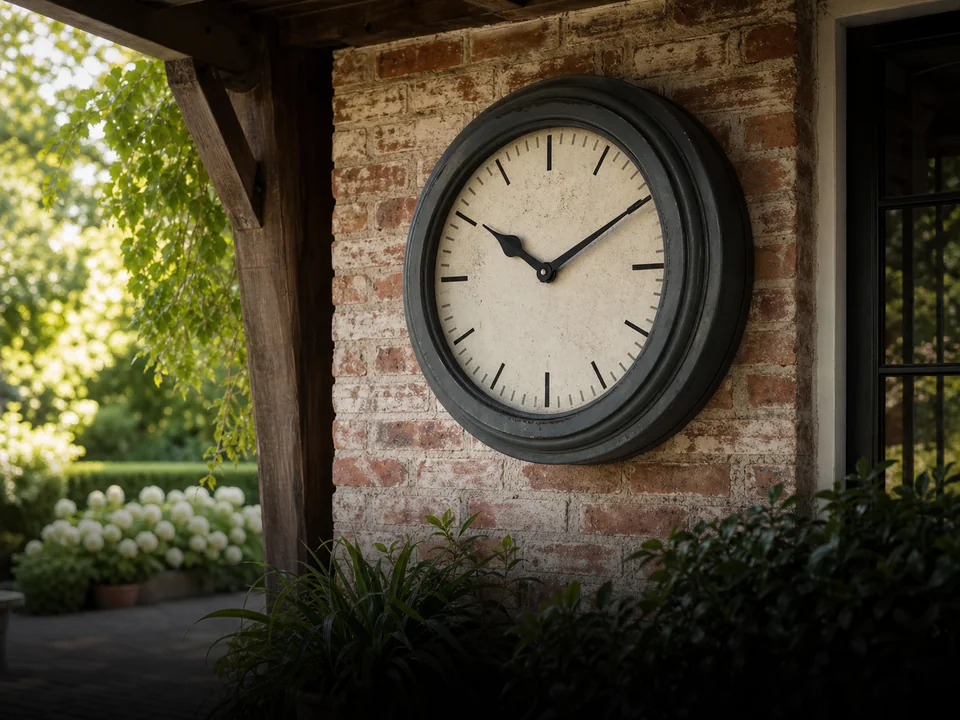
Choose an outdoor clock for the exposure at its mounting point. A covered porch, a shaded wall and a wall facing direct sun are different installations. Read the exact model’s placement instructions before treating an outdoor or weather-resistant label as permission to leave it in rain, snow or extreme heat.
Start with the Mounting Point
Record whether the proposed position receives direct sun, rain or standing snow, and whether an overhang provides shelter. Check the clock’s dimensions, rear access and the wall’s mounting arrangement. An outdoor temperature display on an indoor clock does not establish that the clock itself belongs outdoors.
Two Documented Designs
These are manufacturer-documented examples, not a ranked shortlist. TOPCLOCKS has not exposure-tested either clock.
Two Documented Designs Show details
| Exact model | Documented size and power | Placement or operating limit |
|---|---|---|
| La Crosse Technology WT-3181PL-Q | 18-inch diameter × 2.75-inch depth; one AA alkaline battery; manual quartz time setting | The setup guide requires a shaded outdoor location with an overhang protecting it from sun, standing snow and rain. |
| Bulova C4813 Weather Master | 18-inch diameter × 3.25-inch depth; one AA battery for time and four D batteries for lighting | Bulova describes gasketed lens and movement protection, but advises against direct sunlight in desert conditions. |
Read the Limits Behind the Label
WT-3181PL-Q illustrates why the placement instructions matter. Its current guide calls for shelter. The linked older FAQ also describes a dry environment and says the clock is not waterproof, but contains inconsistent references to radio-controlled operation despite the model’s manual time setting. Use the current matching setup guide for operation.
The WT-3181PL-Q product page and current guide also list different temperature ranges, and the guide’s Fahrenheit and Celsius endpoints do not align exactly. They do not establish one verified operating-temperature limit here. If temperature could decide the installation, confirm the intended conditions and exact version with the manufacturer before relying on a range.
For C4813, the product page describes an upgraded movement introduced in 2024 and warns that high heat can affect battery life. That does not identify the movement inside a particular delivered clock. Its linked Manual 66C supports the basic time and lighting instructions; it does not resolve the hardware revision or establish an IP rating.
Check the Installation and Daily Use
Record the model, location, shelter, lighting and any observed problems. A successful observation under those conditions is not proof of unlimited weather resistance.
- Match the delivered model and controls to its instructions. Confirm exposure limits that matter at your mounting point.
- Use a mounting arrangement suitable for the wall and clock weight. Keep access for batteries and rear controls.
- Check readability from the position where you need the time, including evening light. Separate a lighted dial’s power needs from the timekeeping battery.
- For a clock with temperature or humidity instruments, follow its placement and adjustment instructions. The WT-3181PL-Q guide warns that sunlight can produce high temperature readings.
Sources and Limits
This guide compares documentation and identifies unresolved conditions. No measured weather resistance, year-round battery life, mounting test or universal readable distance is claimed. Source checks and physical product tests are different activities.